













Caffeine-Free Teas for the Evening: Flavors and Brewing Tips
Herbal teas for the evening are caffeine-free infusions that many people reach for once the pace slows and the day is done. Over the years, more customers have been asking about them as a caffeine-free cup for the end of the day. I've spent considerable time with these herbs, both through what we source at Valley of Tea and what I reach for myself at the end of a long day. Here's what I've found worth drinking, and how to get the most from it.
Chamomile
Chamomile is where most people start, and for good reason. It's soft in flavour, widely available, and tastes genuinely pleasant. What you want is whole chamomile flowers, not the dusty yellow powder in most commercial tea bags. Good chamomile has a soft, apple-like sweetness with a faint honey note underneath. It shouldn't taste bitter - if it does, either the quality is poor or you've steeped it too long.
Chamomile has been used in European folk tradition as an evening herb for centuries. Its flavour is mild and undemanding, which tells you something about its character. Brewing: use near-boiling water (90-95°C) and steep for 5 to 7 minutes, covered. Covering the cup matters because the aromatic compounds that make chamomile pleasant and fragrant are volatile and will escape with steam if left open. A simple lid or saucer makes a real difference.
Taste profile: sweet, lightly floral, apple-adjacent. One of the most approachable herbs in this category. You can drink it straight or blend it well with almost anything else on this list.
Browse our herbal teas collection for whole flower chamomile.
Lavender
Lavender is polarizing. Some people love the floral, almost perfume-like character; others find it too much. If you enjoy it, culinary-grade dried lavender buds make a lovely addition to an evening cup, but use a light hand. A teaspoon of lavender to a pot of chamomile is plenty. More than that and it tips from pleasant to soapy very quickly.
Used for generations across Provence and the Mediterranean in tisanes and in the bath, lavender has a long history as an evening scent in that part of the world. Whether you're drinking it or breathing the steam off the cup, the scent alone is a big part of the appeal. Aroma carries much of what we perceive as flavour, so lavender is as much about the nose as the palate.
Taste profile: intensely floral, slightly sweet, herbal. Best used as a blending note rather than a solo herb. Pairs well with chamomile and lemon balm.
Valerian Root
Valerian is not for everyone. The taste is earthy, slightly musty, and takes some getting used to. It has a long history as an evening drink in Europe, and a loyal following. If you're curious, the most common approach is to blend it with something sweeter (chamomile or passionflower) to balance the flavour.
Steep valerian root for a full 10 minutes in near-boiling water, covered. It's a root, not a flower, and it needs more time and heat to release its compounds properly. The smell when you open the jar can be off-putting - earthy and pungent - but it mellows somewhat in the cup.
Taste profile: strongly earthy, slightly bitter, musty. Not a casual sip, but worth exploring for people who don't mind working around the flavour.
Passionflower
Passionflower is underrated. It's quieter than valerian in flavour, which makes it much easier to drink. The dried aerial parts (leaves and stems) brew into a mildly grassy, slightly earthy cup that pairs well with chamomile or lemon balm. It blends into the background without fighting for attention.
Traditionally used across South America and later adopted in Europe, passionflower has a long history as an evening herb. I find it particularly good blended with chamomile - the combination is smooth and easy to drink.
Steep for 7 to 10 minutes in near-boiling water, covered. Like most herbs in this category, it rewards patience in the brewing.
Taste profile: mildly grassy, slightly earthy, neutral. Blends easily, doesn't overwhelm.
Lemon Balm
Lemon balm is one of my personal favourites in this category. It has a bright, fresh lemon scent - more citrus leaf than citrus fruit - and brews into a light, pleasant cup that tastes gentle without being heavy. It's been cultivated in Europe since at least the Middle Ages and has a long history as a garden and kitchen herb.
It works well as a standalone cup or blended with chamomile or passionflower. One thing to note: lemon balm is at its best when fresh or recently dried. It loses its volatile oils faster than most herbs, so if your bag has been sitting in the cupboard for a year, it's time for a new batch. The scent should be immediately apparent when you open the bag - if it smells like hay rather than lemon, it's past its prime.
Steep at around 90°C for 5 to 7 minutes, covered. Don't oversteep - it can go slightly bitter if pushed too long.
Taste profile: bright, lemony, fresh, slightly herbal. One of the most pleasant tasting herbs in this list. Easy to drink every evening.
Peppermint
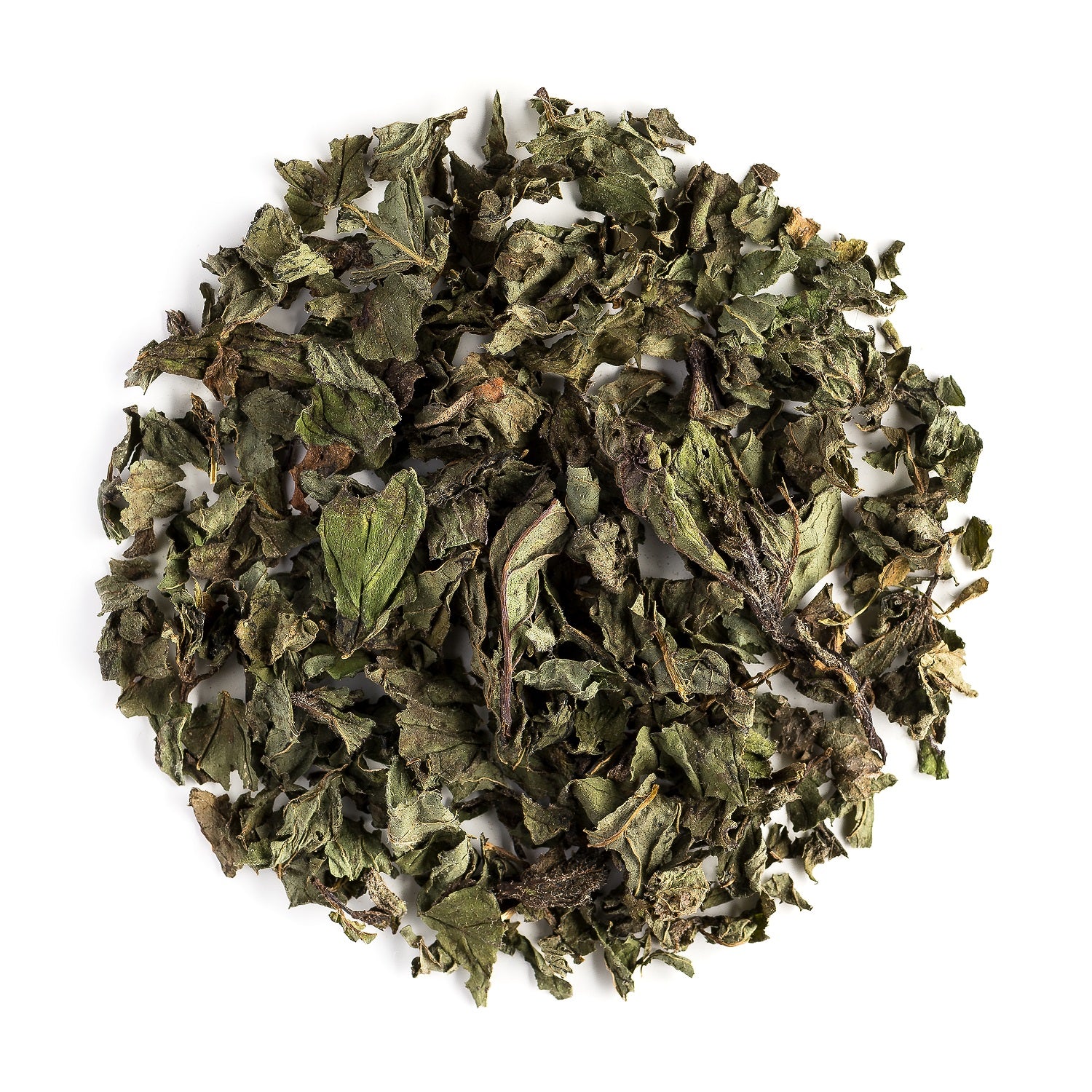
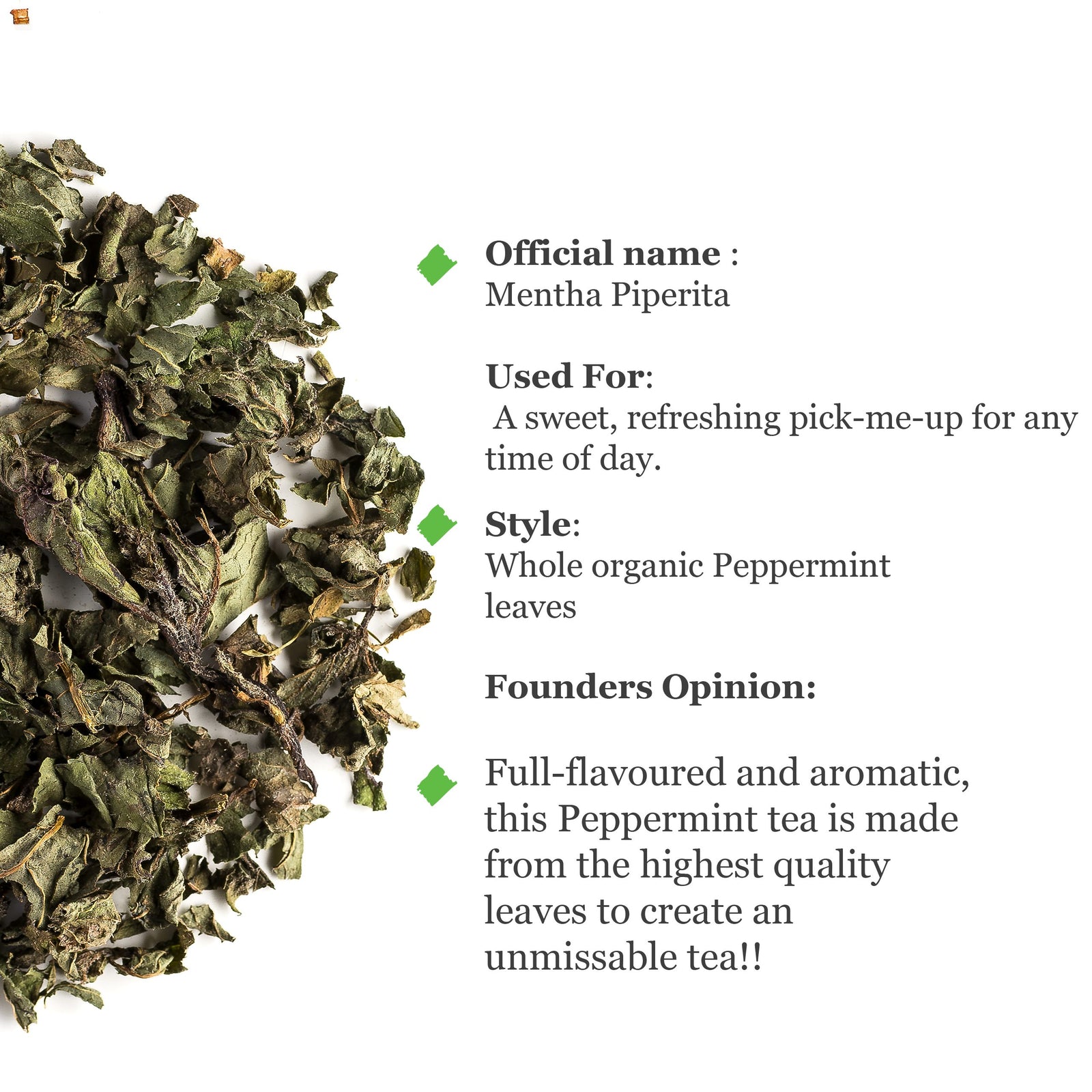
Peppermint earns its place here for its cool, sharp flavour. After dinner, a cup of peppermint tea is a crisp way to finish the meal. It's refreshing and clean-tasting, which some people find too lively a flavour for late in the evening - see whether it suits you.
If you enjoy the flavour but find it too sharp on its own, try blending it with chamomile at a ratio of about 1:3 (peppermint to chamomile). You get the pleasant menthol freshness, softened by the chamomile's sweetness.
Taste profile: cool, sharp, menthol-forward, clean. Very distinct - you either enjoy it or you don't. No subtlety here.
Check out our peppermint tea selection.
Rooibos
Rooibos deserves its place in this list for one simple reason: it's caffeine free, naturally sweet, and genuinely satisfying in a way that lighter herbal teas sometimes aren't. If you're accustomed to drinking tea with milk and want something with that same warmth and body in the evening, rooibos is the answer. It's more of an everyday evening staple than a specialist herb.
The natural sweetness of good rooibos means many people drink it without any added sugar. It has a slight honey and vanilla quality that comes through especially well when steeped for 5 to 8 minutes in fully boiling water. Rooibos is one of the few herbs where full boiling temperature is not only fine but actually recommended - it's robust and can handle it.
Taste profile: naturally sweet, earthy, faint vanilla and honey notes. Full-bodied and rounded. The most tea-like option on this list in terms of mouthfeel.
Explore our rooibos range.
Lesser Known Options Worth Knowing
Beyond the main herbs, a few others are worth mentioning for those who've worked through the standards and want to explore further.
Magnolia Bark
Magnolia bark has a centuries-old history in China and Japan. In tea form it's relatively obscure in the West, but it has a distinctive, slightly spicy and woody flavour that some people find interesting. It's more often found as an ingredient in blends than as a standalone herb. If you come across it, it pairs reasonably well with rooibos or chamomile.
Skullcap
Scutellaria lateriflora is a North American herb with a long history in Appalachian folk tradition. The dried herb brews into a mildly earthy, slightly bitter cup. Most people meet it as a minor part of a blend rather than as a cup on its own. The flavour is subtle enough that it blends well - try it with lemon balm for a pleasant pairing.
California Poppy
Eschscholzia californica is a member of the poppy family, native to western North America. The aerial parts of the plant brew into a mildly sweet, slightly earthy tisane. It is usually drunk as an evening cup. The colour in the cup is a soft yellow-orange, which makes it visually pleasant as well. Taste-wise it's mild and easy to drink, and it works well in a blend with chamomile and passionflower.
Water Temperature and Steeping: Get This Right
Most people underestimate how important proper brewing is for herbal teas. The common mistake is treating them like green tea - a quick 2 or 3 minute steep with water that's not quite boiling, then moving on. That approach gives you flavoured water, not a proper infusion.
Herbal teas (flowers, leaves, and especially roots) need more time and higher temperature than most people give them. Here's what I use as a baseline:
- Flowers (chamomile, lavender): 90 to 95°C, 5 to 7 minutes, covered.
- Leaves and aerial parts (lemon balm, passionflower, skullcap, California poppy): 90 to 95°C, 7 to 10 minutes, covered.
- Roots (valerian): near-boiling or fully boiling, 10 to 15 minutes, covered.
- Rooibos: fully boiling, 5 to 8 minutes.
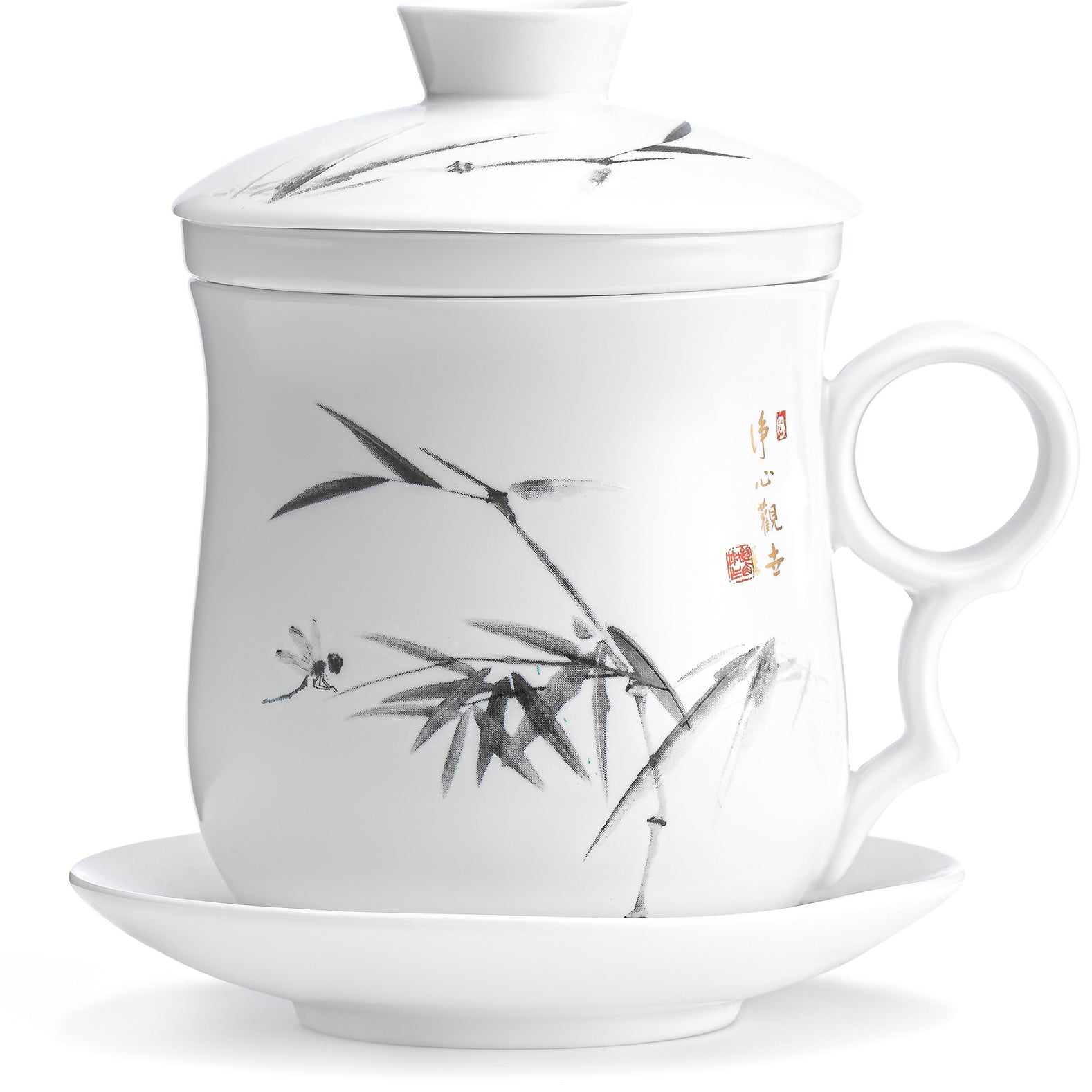
Always cover the cup or pot while steeping. This traps volatile aromatic compounds - many of the components that make these herbs pleasant in the cup evaporate with the steam. A simple saucer on top of your mug is enough.
Use enough herb. Most herbal teas need 2 to 3 grams per 250ml - that's a heaped teaspoon, not a pinch. Commercial tea bags often contain less than a gram. When you switch to loose leaf and use a proper quantity, the difference is immediately apparent.
Taste Profiles at a Glance
One of the most practical things to know before choosing an evening herb is what it actually tastes like. Personal preference matters - if you don't enjoy the cup, you won't keep reaching for it.
- Chamomile: sweet, apple-like, lightly floral. Most people enjoy this.
- Lemon balm: bright, lemony, fresh. Easy to drink, one of the most pleasant.
- Rooibos: naturally sweet, slightly earthy, faint vanilla. Full-bodied and satisfying.
- Passionflower: mild, grassy, neutral. Blends without fighting.
- California poppy: gently sweet, slightly earthy. Mild and undemanding.
- Skullcap: mildly earthy, slightly bitter. Works better in a blend.
- Lavender: intensely floral, perfumed. Use sparingly as a blending note.
- Peppermint: sharp, menthol, cooling. Lively rather than mellow for some people.
- Valerian: strongly earthy, musty, pungent. An acquired taste.
- Magnolia bark: woody, slightly spicy. Best in a blend.
If you're new to evening herbal teas, start with chamomile or lemon balm. If you want something more substantial, rooibos. If you're ready to experiment with blends, passionflower and skullcap are good additions that won't overpower the cup.
What About Supermarket Evening Blends?
You've probably seen commercial evening teas on supermarket shelves. They're not bad products - they use real herbs, typically chamomile and spearmint as the base with smaller amounts of other botanicals. The issue is quantity and quality. A commercial tea bag typically contains 1.5 to 2 grams of herb total, often a mix of lower-grade material that's been sitting in a warehouse and then a shop for months before it reaches you.
When you blend your own from loose leaf herbs bought from a supplier who turns over stock regularly, you control the freshness, the ratio, and the quantity. You can use 3 to 4 grams per cup instead of 1.5. You can make chamomile the dominant note and add just a touch of lavender. You can skip the peppermint if you find it too sharp. The blend becomes yours.
Commercial evening blends are a reasonable starting point if you're curious about the category. But once you know what you like, loose leaf custom blending is simply better - more flavour, more control, and noticeably more pleasant to drink.
Building an Evening Blend
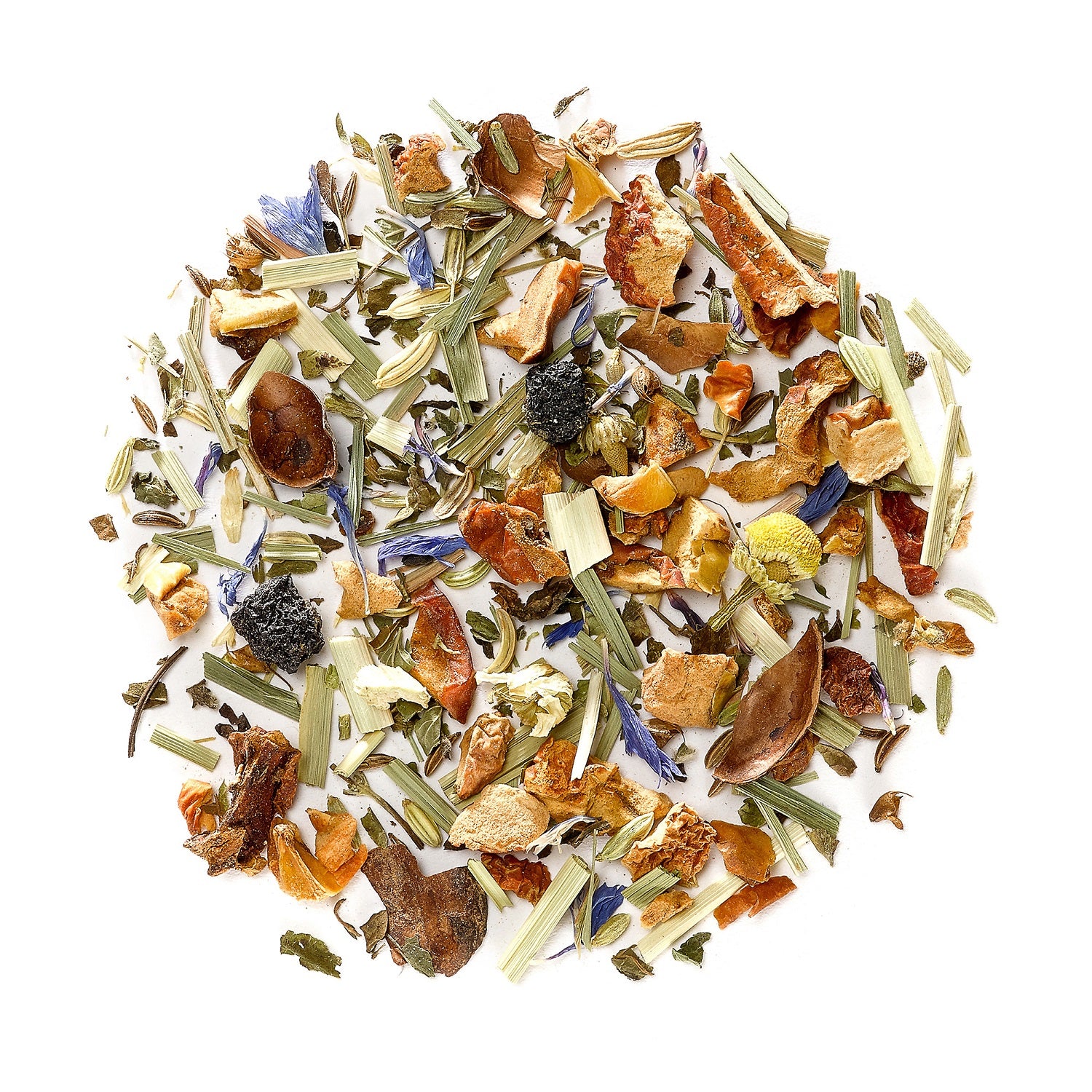
The best evening blend is the one you actually enjoy drinking. Start with a base (chamomile or rooibos work well), add a supporting herb (lemon balm or passionflower), and if you want, finish with a small accent (a little lavender or a pinch of valerian if you don't mind the flavour). A simple ratio to start with: 60% base, 30% supporting herb, 10% accent.
Mix a small batch - maybe 20 to 30 grams - keep it in a sealed jar, and adjust the ratios after a week of drinking it. That's all blending is: iteration based on what you actually experience in the cup. It doesn't need to be more complicated than that.
Some combinations that work well:
- Chamomile + lemon balm (60/40): bright, sweet, very easy to drink.
- Chamomile + passionflower + lavender (60/30/10): floral and gentle.
- Rooibos + chamomile + skullcap (50/40/10): substantial, sweet, slightly earthy.
- Lemon balm + California poppy + chamomile (40/30/30): fresh and mild.
Explore our full range of individual herbal teas for blending - we stock most of the herbs mentioned here as loose leaf.
The Ritual Matters
I want to say something about the act of making tea in the evening, because I think it's undervalued in how people think about this.
The moment you put the kettle on and reach for the herb jar, something shifts. It's a clear signal to yourself that the productive part of the day is over. You're not doing something. You're transitioning. And that transition has a value of its own.
Making tea requires a few minutes of attention. You measure, you wait for the water, you steep, you wait again. It's screen-free by nature if you let it be. The warmth of the mug in your hands, the steam, the scent, the first sip - these are small pleasures that belong to a slower part of the day.
This part is about the habit itself. As a marker between the working day and the evening, it's one of the more pleasant ones I know. The fact that these herbs have a long tradition as evening drinks makes it feel coherent - this cup belongs to the end of the day.
If you can, keep the phone in another room while you drink it. Sit somewhere comfortable. Let the tea cool to the right temperature rather than gulping it hot. That fifteen minutes of intentional quiet is the point of the whole exercise, and the tea makes it more pleasant.
What to Avoid in the Evening
A few things worth keeping in mind:
Avoid anything with actual tea in it if you're caffeine sensitive. Green tea, white tea, oolong, black tea - all contain caffeine. Even a light green tea steeped for three minutes will have enough caffeine to affect some people's sleep, especially if you're drinking it within two to three hours of bed. If you're not sure whether you're caffeine sensitive, assume you are and stick to pure herbal infusions in the evening.
Watch out for bold, bright flavours. Some herbal teas are sold as evening options but contain ingredients with a lot of bite - ginger in large quantities, rosehip (very tart and bright), or citrus peel can taste more lively than mellow to some people. Pay attention to what's actually in a blend before assuming "herbal" means mild.
And don't overthink it. One cup of chamomile tea is simply a pleasant drink. But a consistent evening habit with herbs you genuinely enjoy can make the end of the day something to look forward to. That's reason enough. If you are pregnant, breastfeeding, taking medication or have a health condition, ask your doctor before drinking herbs such as valerian, passionflower, skullcap or California poppy.
Take a look at our caffeine free tea collection for everything suitable for evenings.
Lämna en kommentar
Kommentarer granskas innan de visas.
Mer i Valley of Tea Blog | Tea Guides, Origins & Brewing Tips
The Complete Guide to Drinking Tea
What tea is, how the main types differ in the cup, and how to brew each one properly. Water temperature, steeping times, storage and how to get more than one cup from your leaves.
Läs mer

Black Tea: Types, Processing, and How to Brew It
Black tea is fully oxidized Camellia sinensis. Compare Assam, Darjeeling, Keemun, and Ceylon varieties. Learn processing, brewing, and caffeine levels.

How To Grow Black Tea
Learn how to grow black tea at home: soil, climate, and the five processing steps from fresh leaf to a finished cup of black tea.

Visdom är vägen till bättre te.
Få vår kostnadsfria bryggguide: rätt vatten, temperatur och dragtid för varje te vi säljer. Du får också veta först när nya skördar kommer in.
Ingen skräppost. Avsluta när du vill.
Kolla din inkorg.
Guiden är på väg.