












Lemon Balm Tea: History, Flavor, and How to Brew It
Lemon balm is a lemon-scented member of the mint family, and its character comes from compounds that can be named and measured. Melissa officinalis takes its name from the Greek word for honey bee and has been grown in Mediterranean gardens for centuries, and its chemistry is well documented, from rosmarinic acid to the citrus compounds citral and citronellal. That makes it a herb whose flavour can be traced to specific compounds rather than vague descriptions. This post covers that chemistry, how to brew lemon balm as a standard cup and as a concentrate, and how to judge the quality of the dried herb.
The Chemistry Behind Lemon Balm
Lemon balm contains rosmarinic acid and caffeic acid, two polyphenolic compounds found widely across the mint family. Rosmarinic acid also occurs in rosemary, sage and thyme, all close relatives of lemon balm. Both compounds dissolve readily in hot water, which is why they pass into an ordinary infusion.
Lemon balm is sold in several forms, from fresh sprigs to dried leaf and extracts. Dried leaf is the herb at its simplest: harvested, dried and cut, with nothing added. It is the form this post deals with, brewed as tea.
Strength is the main thing to get right. The flavour depends on how much leaf you use and how long it steeps. The sections below show how to get a clean, reliable cup of lemon balm tea, at normal strength or as a concentrate.
Standard Brew vs Concentrate: Two Ways to Prepare Lemon Balm
Lemon balm can be brewed at normal strength for drinking or at double strength as a concentrate. Both start from the same dried leaf and hot water; only the ratio and steeping time change. A cup of lemon balm tea is mostly about aroma: the citral and citronellal that give the herb its lemon character.
A standard cup brings that aroma out gently, without bitterness. As a caffeine-free herbal infusion, lemon balm is easy to drink at any time of day, hot or cooled.

There is a practical second option for tea users. Brewing a double-strength concentrate (2 tsp of dried lemon balm per 100 ml, steeped for 10 minutes) and then cooling it to room temperature gives a liquid that can be diluted with cold or sparkling water for an iced drink, or used as a base for lemonade and syrups. This approach gives a stronger lemon character than a standard cup and is worth trying in warm weather. It needs nothing more than the dried herb and a kettle.
Covering the steep matters: the volatile lemon compounds in the herb, citral and citronellal, escape as steam if the cup is left open, reducing the concentration you end up with.
How to Brew Lemon Balm Tea
Concentrated brew
Brew 2 tsp of dried lemon balm per 100 ml of water at 90-95C. Steep for 10 minutes covered, then let it cool completely to room temperature. Dilute it roughly 1:1 with cold still or sparkling water, or stir it into homemade lemonade. Make it in small batches, because the lemon aroma fades once the brew sits. Use a clean jug or bottle every time. Keep any leftover concentrate covered in the fridge and use it within a day or two.
Standard brew for drinking
For drinking, use 1 tsp per 200 ml at 90-95C, steeping for 5-7 minutes covered. Taste it at 5 minutes and leave it longer if you want more lemon. I find our organic lemon balm brews with a clean citrusy note and no bitterness at these parameters, because the citral compounds that give it the lemon character release well before the brew turns sharp.

The citral content is also the first thing to degrade if the herb is stored poorly, so keep it sealed, away from light, and use within 12 months of opening for best results.
What to look for in the herb itself
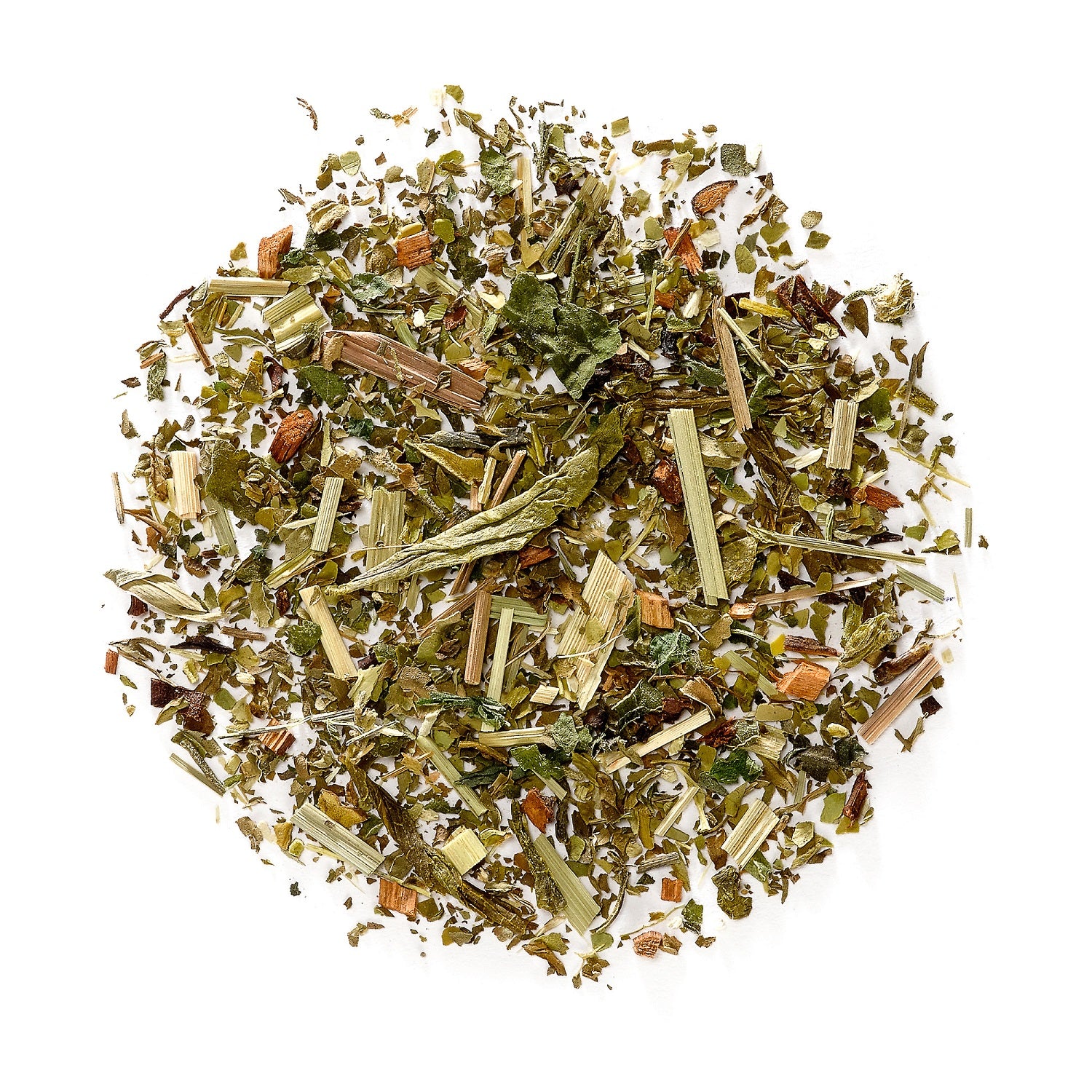
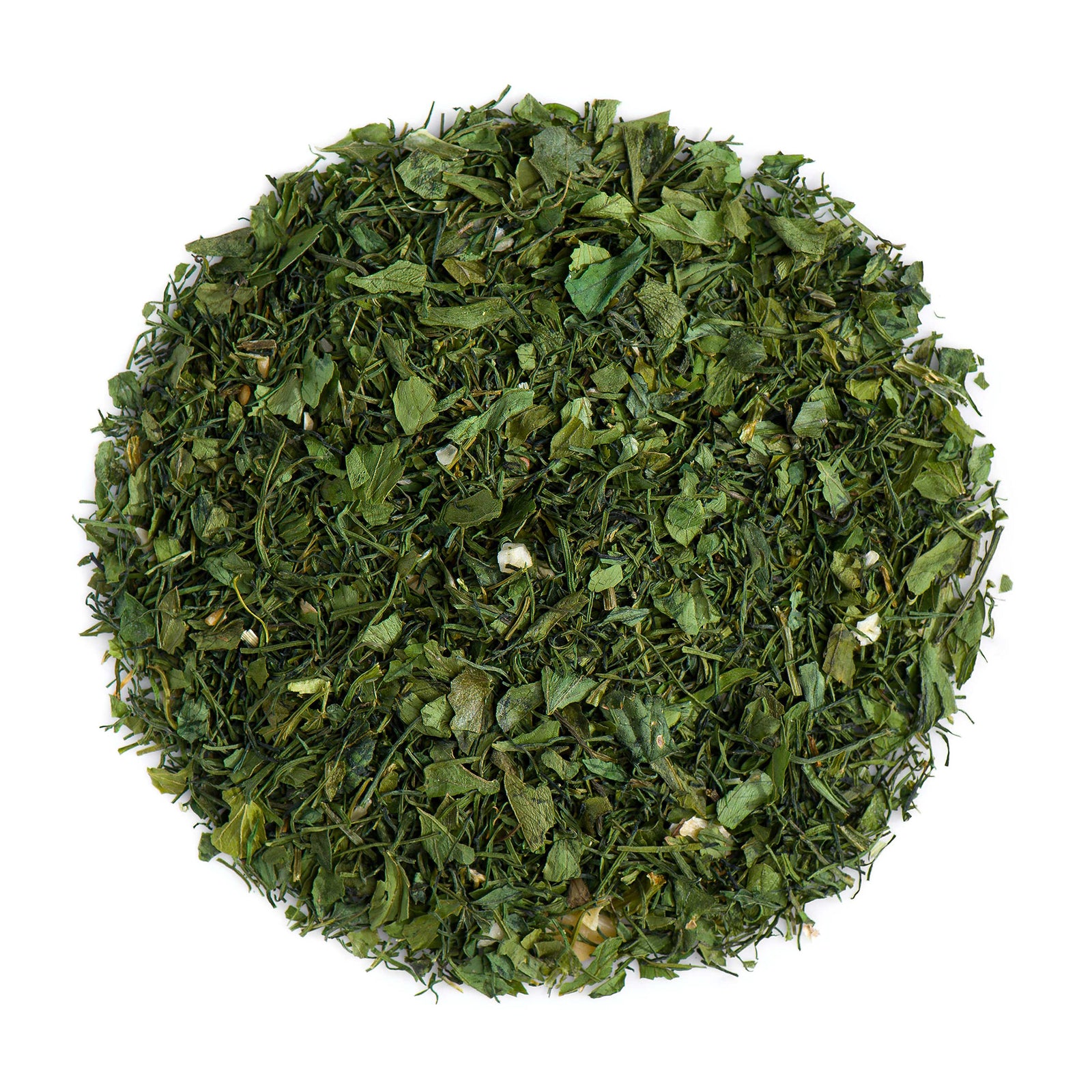
High-quality dried lemon balm gives the best starting point for both brews. Look for bright green colour in the dried leaf and a strong lemon scent when you crush a small pinch. Dull, grey-green herb with little aroma has likely lost most of its aromatic compounds.
Our lemon balm is certified organic Melissa officinalis sourced from Portugal and Greece. The quality test is all in the scent: crush a small pinch and it should hit you with concentrated lemony goodness. Sweet and lemony with a coating aroma that lingers. That origin-specific quality is what makes it worth using for something like a concentrate, where strength of flavour matters.
Final Thoughts
Lemon balm is a herb with a clear chemistry, from rosmarinic acid to the citral and citronellal that give it its lemon scent. Those volatile lemon compounds are why covered steeping and careful storage matter. Drink it as a standard cup, or brew a double-strength concentrate for iced drinks and lemonade.
Start with high-quality dried lemon balm, store it properly, and let the scent tell you when it is past its best. For any health concern, consult a doctor. Lemon balm tea is a food product, not a medicine, and should never replace treatment your doctor prescribes.

Zostaw komentarz
Komentarze są zatwierdzane przed publikacją.
Więcej w Valley of Tea Blog | Tea Guides, Origins & Brewing Tips
The Complete Guide to Drinking Tea
What tea is, how the main types differ in the cup, and how to brew each one properly. Water temperature, steeping times, storage and how to get more than one cup from your leaves.
Czytaj dalej

Black Tea: Types, Processing, and How to Brew It
Black tea is fully oxidized Camellia sinensis. Compare Assam, Darjeeling, Keemun, and Ceylon varieties. Learn processing, brewing, and caffeine levels.

How To Grow Black Tea
Learn how to grow black tea at home: soil, climate, and the five processing steps from fresh leaf to a finished cup of black tea.

Mądrość to droga do lepszej herbaty.
Bezpłatny przewodnik parzenia: właściwa woda, temperatura i czas parzenia dla każdej herbaty z naszej oferty. Informacje o nowych zbiorach trafiają najpierw do subskrybentów.
Bez spamu. Rezygnacja w każdej chwili.
Prosimy sprawdzić skrzynkę.
Przewodnik jest w drodze.